
Categories
Category:
News
New NPPF 2026: Major Changes Affecting Planning Applications from 17 August
A new National Planning Policy Framework (NPPF) has been published for England, replacing the December 2024 version. Its national decision-making policies are material considerations from the day of publication, so the changes may affect planning applications and appeals immediately, not only future local plans.
In summary: The new NPPF strengthens support for development within settlements, gives substantial weight to suitable small-site and residential-curtilage schemes, and creates clearer routes for certain development outside settlement boundaries. The policies in the new NPPF are material considerations that must be taken into account in decision-making from 17 August 2026 and may affect live applications and appeals immediately.
The direction of travel is not entirely unexpected: many of the reforms were trailed in the December 2025 consultation. What matters now is that the policy wording is final.
For homeowners, landowners and developers, the strongest opportunities are greater support for development within settlements, more explicit backing for small-site intensification and clearer routes for certain development outside settlement boundaries.
Key Takeaways
- The policies in the new NPPF are material considerations that must be taken into account from 17 August 2026.
- Policy S4 creates a stronger starting point for suitable development within settlements.
- Policy L2 gives substantial weight to additional homes and floorspace on underused plots and within residential curtilages.
- Policy S5 provides clearer routes for specified development outside settlement boundaries.
- Development plan policies that are materially inconsistent with the new national decision-making policies should be given very limited weight, unless they were examined and adopted or made against this Framework.
- Where evidence shows that unauthorised development was intentional, that fact should be given substantial weight in retrospective applications and enforcement appeals.
What does the new NPPF mean for development within settlements?
New Policy S4 says that development proposals within settlements should be approved unless the benefits would be substantially outweighed by adverse effects when assessed against the Framework’s national decision-making policies.
That is a materially stronger starting point than the December 2024 NPPF, where enhanced support focused more narrowly on suitable brownfield land.
It does not make every site acceptable. Proposals must still respond to design, amenity, heritage, flood risk, biodiversity and other relevant protections.
However, it could shift the balance in favour of suitable development across a much wider range of sites within defined settlements.
Could the new NPPF make backland and garden development easier?
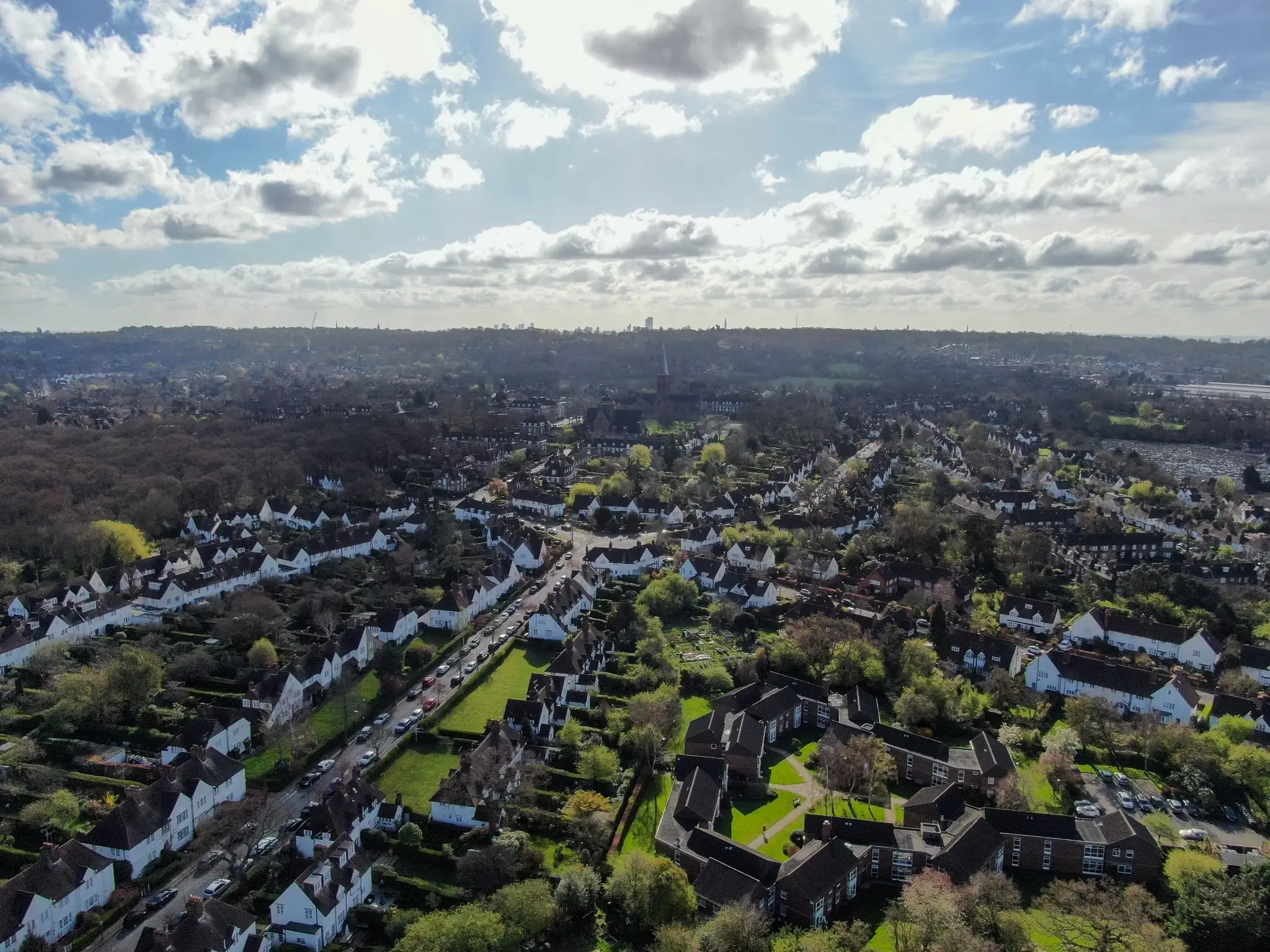
Policy L2 is likely to be especially important for homeowners and small developers. It says substantial weight should be given to the benefits of creating additional homes or floorspace within settlements through measures including:
- using airspace above existing residential or commercial buildings;
- adding mansard roofs or filling gaps in existing roof lines;
- introducing taller buildings at suitable street corners;
- sensitively redeveloping underused plots; and
- creating additional units within residential curtilages, which may create opportunities for appropriately designed backland or garden development.
The Framework also introduces national parameters for residential curtilages.
Ordinarily, development should not occupy more than twice the footprint of all existing buildings on the site. Following development, at least 50% of the currently undeveloped area within the curtilage should remain undeveloped.
More development may be possible where it can be accommodated without harm, taking account of local character, infrastructure and the importance of locating development in sustainable locations.
These figures do not create an automatic permission and are not a substitute for a site-specific assessment. Access, privacy, daylight, external amenity space, street scene and other planning considerations remain important.
Even so, the policy gives applicants a much clearer national basis for promoting carefully designed intensification. For homeowners and small developers, this may create new opportunities to reconsider sites that were previously dismissed as too difficult or constrained.
“The new NPPF creates meaningful opportunities for homeowners, landowners and developers to reconsider sites that may previously have appeared too constrained, particularly small and underused plots within settlements. However, it is not an automatic green light, and every proposal will still need to be carefully assessed against the development plan and the specific circumstances of the site.” – Cerys Atchinson, Chartered Town Planner at Planning By Design
Can development now be approved outside settlement boundaries?
Policy S5 sets out the forms of development that should be approved outside settlements unless their benefits are substantially outweighed by adverse effects.
The list includes:
- the reuse, extension, alteration or replacement of certain existing buildings;
- redevelopment of previously developed land;
- limited infilling within groups of houses;
- some rural business and tourism proposals;
- qualifying residential or mixed-use development near well-connected stations; and
- development addressing an evidenced unmet need where the policy criteria are satisfied.
For housing, evidence of unmet need can include an authority being unable to demonstrate a five-year supply of deliverable housing sites or scoring below 75% in the latest Housing Delivery Test.
Proposals must still be physically well-related to an existing settlement and of a scale that available or planned infrastructure can accommodate, unless the nature of the development makes that location requirement inappropriate.
This is not a general green light for countryside development. Isolated homes remain tightly controlled, proposals outside the listed categories require exceptional circumstances, and separate policies apply to Green Belt and Local Green Space.
However, the new wording creates a clearer national route for several categories that applicants previously had to argue through a more fragmented policy framework.
Does the new NPPF apply to existing planning applications and appeals?
Yes. Annex A states that the policies in the Framework are material considerations that must be taken into account in decision-making from the day of publication.
This means that the new policies may be relevant to planning applications and appeals that have already been submitted but have not yet been determined.
Annex A also says that development plan policies, or parts of those policies, that are materially inconsistent with the new national decision-making policies should be given very limited weight, unless they were examined and adopted or made against this Framework.
That could be significant where an older local policy takes a materially more restrictive approach than the new national policy.
Age alone is not enough. Other development plan policies should not lose weight simply because they pre-date the new Framework. The key question will be whether there is a material inconsistency, assessed policy by policy and in the circumstances of the individual proposal.
Applicants with a live application or appeal should therefore consider whether their planning case needs to be reviewed or supplemented in light of the new Framework.
Will the new NPPF make planning decisions quicker?
The new Framework contains several practical measures aimed at reducing avoidable delay and ensuring a more proportionate approach to decision-making.
Councils should:
- seek only the minimum information necessary for non-major proposals;
- keep local validation requirements proportionate to the scale and potential impact of the development;
- consult statutory or internal consultees only where necessary;
- avoid delaying decisions beyond statutory consultee deadlines except in specified circumstances;
- avoid unnecessary pre-commencement conditions; and
- avoid restricting national permitted development rights by condition without clear justification.
For applicants facing repeated validation requests, unnecessary assessments or slow consultation responses, these policies may support a request for a more proportionate approach to information requirements, consultation and conditions.
They do not remove the need to submit a complete and properly supported application. However, they strengthen the expectation that the information requested and the decision-making process should be proportionate to the proposal.
What has changed for retrospective planning applications?
There is an important warning for anyone considering carrying out development first and seeking planning permission later.
Under Policy DM8, where evidence shows that unauthorised development was intentional, that fact should be given substantial weight when deciding a retrospective planning application or an enforcement appeal.
Retrospective planning permission remains a lawful route in appropriate cases. However, intentionally proceeding without the necessary permission may now count much more heavily against an applicant.
The safest approach is to establish whether planning permission is required and assess the planning position before starting work.
If unauthorised development has already taken place, obtaining professional advice early may help identify the most appropriate response before formal enforcement action progresses.
What about Green Belt and grey belt?
Green Belt remains important, but it is not the biggest new story in this update.
Grey belt and the Golden Rules were introduced in the December 2024 reforms. The 2026 Framework embeds them within the new policy structure and adds a detailed national methodology for assessing grey belt land.
This should support greater consistency in how grey belt assessments are prepared and considered.
However, proposals in the Green Belt remain subject to a distinct policy framework. The stronger general support for development within or outside settlements should not be treated as overriding the relevant Green Belt policies.
What should applicants do now?
If you have a live application, an appeal, land within or near a settlement boundary, or a plot with potential for intensification, it may be worth reviewing the planning case against the new Framework now.
In particular, consider whether:
- Policy S4 gives the proposal a stronger starting point within a settlement;
- Policy L2 supports an additional dwelling, backland scheme, roof extension or better use of an underused plot;
- Policy S5 creates a clearer route for a site outside a settlement;
- an older local policy is materially inconsistent with the new national decision-making policies;
- a live application or appeal should be updated to address the new Framework; or
- validation requirements or proposed conditions are more onerous than necessary.
The changes may be particularly relevant to homeowners, landowners and developers considering:
- backland or garden development;
- an additional home within an existing residential plot;
- infill development;
- upward extensions or additional roof-level accommodation;
- redevelopment of underused or previously developed land;
- development near a well-connected station;
- rural building reuse or replacement; or
- a current planning application or appeal affected by restrictive local policies.
Frequently Asked Questions About the New NPPF 2026
When did the new NPPF 2026 take effect?
The new National Planning Policy Framework took effect on 17 August 2026. Its policies became material considerations that must be taken into account in planning decisions from the date of publication.
Does the new NPPF apply to existing planning applications and appeals?
Yes. The new policies may be relevant to applications and appeals that have not yet been determined. Their effect will depend on the circumstances of the proposal, the development plan and other material considerations.
Does the new NPPF make backland or garden development easier?
Policy L2 gives substantial weight to the benefits of creating additional homes or floorspace through suitable development within existing plots and residential curtilages.
This may create opportunities for appropriately designed backland or garden development, but it does not guarantee planning permission. Design, access, privacy, daylight, amenity space, local character and infrastructure must still be considered.
Can development now be approved outside settlement boundaries?
Policy S5 provides clearer support for specified forms of development outside settlements, including certain building reuse or replacement, brownfield redevelopment, limited infill, rural businesses and development addressing an evidenced unmet need.
It is not a general permission for countryside development, and separate rules apply to Green Belt and Local Green Space.
What has changed for retrospective planning applications?
Where evidence shows that unauthorised development was intentional, Policy DM8 says that fact should be given substantial weight when deciding a retrospective planning application or enforcement appeal.
Applicants should therefore establish whether planning permission is required before starting work.
Find out what the new NPPF means for your site
Do you have a planning application, an appeal, a backland plot or land within or near a settlement boundary?
Planning By Design can assess how the new NPPF affects your site and identify the strongest route forward.
Contact our award-winning planning team to arrange an initial consultation.

After completing her Masters in Urban and Regional Planning in 2019, Cerys gained experience in the public and private sectors. Specialising in transport planning for minor and major developments her unique skillset provides huge value to our clients and town planners by negating the need for costly and time-consuming third-party specialists.
Need Planning Advice? Get a Free Consultation.
Contact UsGet a Free Instant Estimate!
Cost Calculator


