MENU

Categories
Category:
Blog
From Empty Offices to Vibrant Venues: How to Turn UK City‑Centre Space into Restaurants, Bars or Retail
26/11/2025 by Silas Willoughby
Some city centres across the UK are full of underused office floorspace. The good news? Some empty offices can become cafés, restaurants, bars or shops with less red tape than you think, if you plan the permissions properly and design from day one for building regulations, licences and neighbour amenity.
The big unlock: Use Classes and “when permission is required”
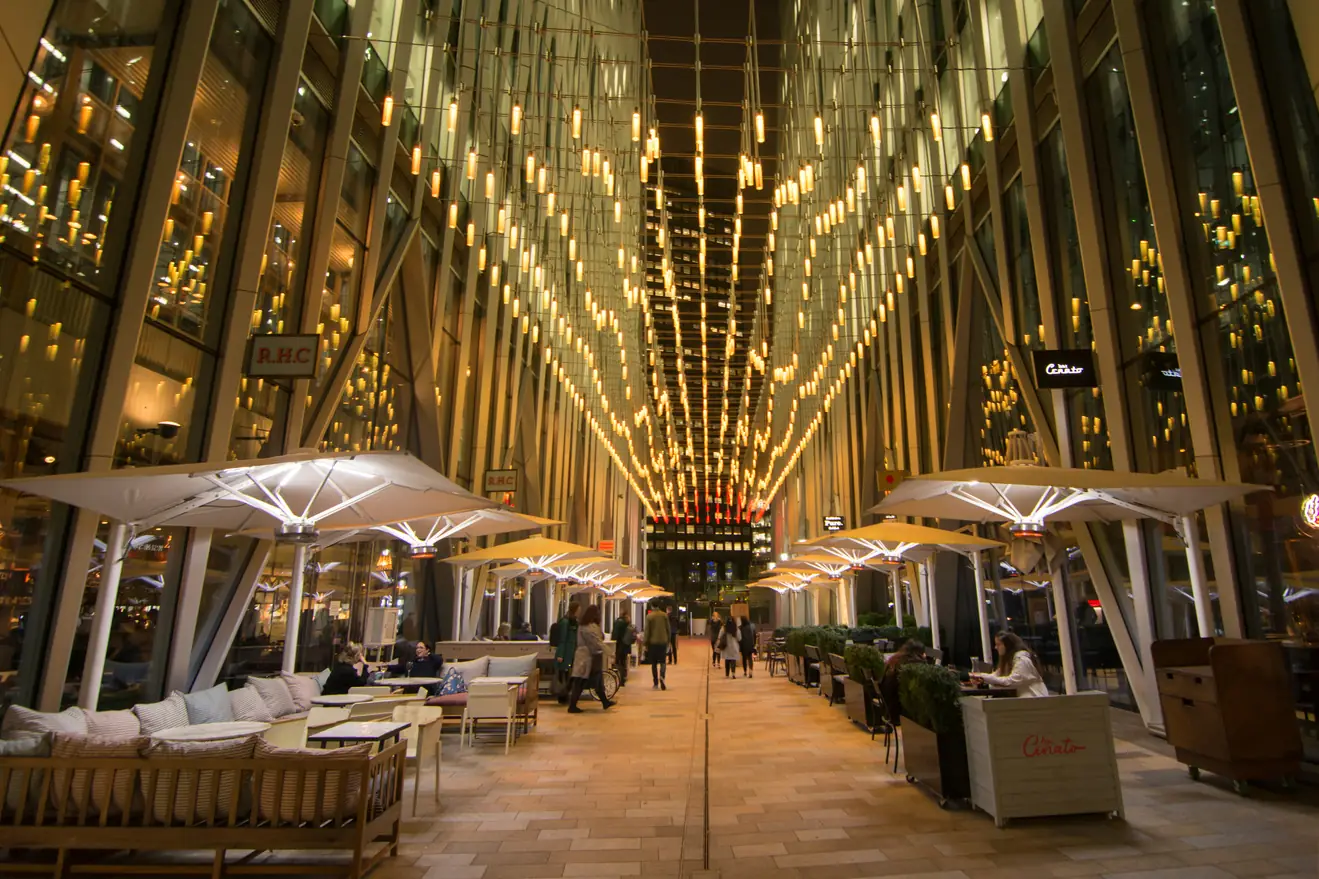
In England, Use Class E (Commercial, Business and Service) groups together offices, shops and many food‑and‑drink premises where consumption is mostly on the premises. Switching an office to a shop or café/restaurant within Class E can, in some cases, be treated as not development, so planning permission may not be required. This is because changes within the same use class fall outside the legal definition of development in the Town and Country Planning Act 1990, as confirmed by the government’s Planning Practice Guidance
Two important caveats:
- External works (new shopfronts, louvres, flues, doors, ramps, plant screens) are development and will usually need planning permission even if the change of use itself doesn’t.
- Bars/pubs and hot‑food takeaways are not in Class E. They are sui generis (in a class of their own). Creating a bar, pub or takeaway from an office usually does need planning permission.
Silas Willoughby, Chartered Town Planner says: “Treat use and works as two separate tracks. We often secure a Lawful Development Certificate (LDC) to lock in that a Class E‑to‑E use doesn’t need permission, then run a focused planning application for the physical alterations.”
A note on Article 4 areas

Devolved nations differ
Wales, Scotland and Northern Ireland use different use class frameworks. Wales still uses the older A/B classes; Scotland has its own order (Class 3 for food and drink on the premises; pubs/takeaways generally sui generis); Northern Ireland has a distinct 2015 Order.
Wales, Scotland and Northern Ireland use different use class frameworks. Wales still uses the older A/B classes; Scotland has its own order (Class 3 for food and drink on the premises; pubs/takeaways generally sui generis); Northern Ireland has a distinct 2015 Order.
Restaurants and cafés vs bars and takeaways – what’s the difference?

There’s also recent history around pub protections: since May 2017 the GPDO changes removed national permitted development rights to demolish or change the use of pubs without permission, local assessment is required.
Don’t skip the LDC (even if you think you don’t need permission). If your proposal is Class E to Class E, apply for a Lawful Development Certificate (Proposed Use) before you spend heavily on design or fit‑out. An LDC is a formal, binding confirmation that your change is lawful and no planning permission is required, hugely useful with landlords, funders and buyers. Government guidance sets out what to include (precise description, clear red‑line site, evidence).
The other approvals you’ll likely need (and why they matter)

Even where use doesn’t need permission, three regimes nearly always apply:
(a) Building Regulations (design it right, first time)
You’ll need compliant layouts, structure and services—think means of escape, fire strategy, ventilation, sanitary accommodation, accessibility (Part M), and energy/air‑tightness. For ventilation and commercial kitchens, start with Approved Document F (Ventilation) and Approved Document B (Fire Safety); together they drive duct routes, make‑up air, fire dampers and smoke control. From 6 April 2024, building control in England is regulated by the Building Safety Regulator, and private inspectors are now Registered Building Control Approvers (RBCAs)—so appoint the right people early.
You’ll need compliant layouts, structure and services—think means of escape, fire strategy, ventilation, sanitary accommodation, accessibility (Part M), and energy/air‑tightness. For ventilation and commercial kitchens, start with Approved Document F (Ventilation) and Approved Document B (Fire Safety); together they drive duct routes, make‑up air, fire dampers and smoke control. From 6 April 2024, building control in England is regulated by the Building Safety Regulator, and private inspectors are now Registered Building Control Approvers (RBCAs)—so appoint the right people early.
Pro tip: Early coordination with an RBCA and your MEP engineer can avoid costly rework when kitchens, toilets or plant need new risers.
(b) Licensing (if you sell alcohol, provide late‑night refreshment or entertainment)
Bars and many restaurants need a premises licence under the Licensing Act 2003. Late‑night refreshment (hot food/drink served 23:00–05:00) is a separate licensable activity. The Home Office’s section 182 Guidance (updated February 2025) explains policies like cumulative impact and how local authorities assess hours, noise and dispersal plans. Some councils also operate a Late Night Levy for alcohol sales after midnight. Build this into your business plan.
(c) Highways/outdoor seating (Pavement Licences)
If you want tables and chairs outside, use the now‑permanent pavement licence route (streamlined by the Levelling‑up and Regeneration Act 2023). Fees are capped, licences can run up to two years, and in many cases an approved pavement licence brings deemed planning permission for the licensed area while the licence is valid.
And don’t forget advertisements: new fascia signs—especially illuminated ones—often need advertisement consent under the 2007 Regulations. The government’s user guide explains what’s permitted, what’s deemed consent, and when you must apply.
And don’t forget advertisements: new fascia signs—especially illuminated ones—often need advertisement consent under the 2007 Regulations. The government’s user guide explains what’s permitted, what’s deemed consent, and when you must apply.
Neighbourliness: extraction, odour, noise and servicing

Most refusals (and neighbour objections) turn on impacts, not principle. Plan for:
Kitchen extraction & odour: Where you site your riser and discharge point is crucial. Although DEFRA’s 2005 note is withdrawn, many councils still reference its risk‑based approach and updated professional guidance (EMAQ/IAQM) for specifying filtration and stack heights. Put simply: design for adequate dilution, filtration and maintenance from day one.
- Noise: Condensers and fans must meet local acoustic criteria. National policy requires development to be appropriate to its location and to mitigate and reduce to a minimum adverse noise impacts—an “agent‑of‑change” mindset still underpins decisions. Expect BS 4142‑style assessments and conditions on hours and plant noise.
- Servicing & refuse: Provide internal bin stores and realistic delivery arrangements; highways teams will look at safety and obstruction.
Silas Willoughby, Chartered Town Planner says: “Bring your acoustician and MEP engineer in at concept stage. A clean route to roof level for extraction and plant will make or break many restaurant conversions.”
Fire safety, accessibility and inclusivity

Under the Regulatory Reform (Fire Safety) Order 2005, the Responsible Person must carry out and keep an up‑to‑date fire risk assessment once the premises is occupied, with appropriate precautions in place. Design the escape strategy and fire compartmentation with Building Regulations compliance rather than after the fact.
For access, Approved Document M sets a practical baseline (approaches, thresholds, accessible WCs, seating mix). The Equality Act 2010 also places duties on service providers to make reasonable adjustments. Early design choices (door widths, ramped access, seating layouts, menu readability) can fulfil both legal duties and good customer experience.
For access, Approved Document M sets a practical baseline (approaches, thresholds, accessible WCs, seating mix). The Equality Act 2010 also places duties on service providers to make reasonable adjustments. Early design choices (door widths, ramped access, seating layouts, menu readability) can fulfil both legal duties and good customer experience.
Food law and drainage
Food businesses must register with the local authority at least 28 days before trading. Plan your HACCP, hygiene pathways and refuse streams alongside the fit‑out.
Drainage from hot‑food kitchens should include effective FOG (fats, oils and grease) management. Industry guidance points to using BS EN 1825 grease separators or equivalent effective systems and maintaining them properly; water companies actively enforce against harmful discharges.
Food businesses must register with the local authority at least 28 days before trading. Plan your HACCP, hygiene pathways and refuse streams alongside the fit‑out.
Drainage from hot‑food kitchens should include effective FOG (fats, oils and grease) management. Industry guidance points to using BS EN 1825 grease separators or equivalent effective systems and maintaining them properly; water companies actively enforce against harmful discharges.
What about trade effluent consent?
The Water Industry Act 1991 s.118 requires consent for trade effluent discharges, but many water companies treat typical restaurant wastewater as not trade effluent and instead control harmful discharges under other provisions—check your local undertaker’s policy early.
Energy performance
If you’re letting the space, remember the Minimum Energy Efficiency Standards (MEES) for non‑domestic property: since 1 April 2023 it’s unlawful to continue letting a commercial unit with EPC F or G unless a valid exemption is registered. Refurbishment is often the best moment to improve fabric and systems and avoid a stranded asset.
If you’re letting the space, remember the Minimum Energy Efficiency Standards (MEES) for non‑domestic property: since 1 April 2023 it’s unlawful to continue letting a commercial unit with EPC F or G unless a valid exemption is registered. Refurbishment is often the best moment to improve fabric and systems and avoid a stranded asset.
Heritage and design quality

Why use professionals and why Planning by Design?

What we do at Planning by Design:
- Planning strategy & LDCs: We front‑load feasibility (is it Class E? any Article 4? heritage constraints?), draft your Lawful Development Certificate and any targeted planning permissions for works, with clean reasoning mapped to PPG and local policy.
- Licensing readiness: We align layouts, capacities and acoustics with section 182 Guidance and local policies (cumulative impact areas, Late Night Levy) so your premises licence application lands smoothly.
- Architectural drawings & Building Regulations: Our designers coordinate with Registered Building Control Approvers to achieve compliant plans, means of escape, Part B, Part F, Part M and plant strategy reducing redesign risk later.
- Neighbourliness engineered in: We commission the right acoustic and odour inputs early so you can show the council and neighbours that extraction, noise and servicing are solved—not promised.
- Public‑realm add‑ons: We prepare pavement licence plans (furniture zones, inclusive access, hours) and handle any advertisement consent for signage alongside shopfront approvals.
Silas Willoughby, Chartered Town Planner says: “Success isn’t just about ‘Can I get permission?’ It’s about designing out refusal risks and sequencing planning, licensing and building control so build and opening dates stay predictable.”
A quick story to bring it together
An investor approached us about a 1980s city‑centre office floor: deep plan, no obvious kitchen route, conservation area frontage. Our feasibility showed Class E‑to‑E use was lawful, so we secured an LDC first. We then designed a slim kitchen riser through secondary cores to reach the roof with filtration at source and acceptable discharge, produced an acoustic report to meet plant noise conditions, and coordinated Part M access via a discreet internal ramp. In parallel, we briefed a licensing solicitor on hours and cumulative impact policy, submitted advertisement consent for a restrained fascia, and packaged a pavement licence plan that preserved a 2‑metre clear footway. Result: a determined design that sailed through—because the tricky bits were solved up front.
FAQ

Unlikely. Bars/pubs are sui generis; you’ll need planning permission for the change of use and a premises licence.
What if I’m just doing a café/restaurant?
If it sits within Class E(b) and you’re not doing external works, it may be lawful without permission, but apply for an LDC to confirm it before you invest.
Do I always need a big roof flue?
Often yes for hot food. Councils expect proper discharge and odour control; design and justify the stack route and filtration early.
Can I put tables outside straight away?
Not without a pavement licence (or other relevant consent). The post‑2023 regime is streamlined, capped fees, up to 2‑year licences, and may include deemed planning permission for the licensed area.
Do Building Regulations apply even for a “simple” fit‑out?
Yes, fire safety, ventilation and accessibility must meet current standards, and you’ll need a building control route via a local authority or RBCA.
Ready to repurpose your office?
If you’re contemplating a city‑centre conversion to restaurant, bar or retail, the smartest first step is a joined‑up feasibility: confirm the use class/LDC route, draw a build‑able scheme that meets Building Regulations, and pre‑empt licensing and neighbourliness issues.
Planning by Design’s award‑winning team shapes the strategy, navigates the application process, and delivers clear, submission‑ready drawings to give your project the best chance of success. Contact Us for a free no-obligation consultation.

AuthorSilas WilloughbyChartered town planner
With an RTPI accredited degree in both urban design and regional planning, Silas has over 8 years experience working as a town planner. His extensive experience in the private sector including residential, commercial schemes and masterplanning means he has the required skills to manage planning applications for any development.
View all posts by Silas Willoughby
More News & FAQsNeed Planning Advice? Get a Free Consultation.
Contact UsGet a Free Instant Estimate!
Cost Calculator


